
Turn Data and AI into Confident Decisions


Most B2B commerce organizations do not have an AI problem. They have a data problem that makes AI impossible.
Fragmented product data. Siloed ERP and OMS. Pricing signals that only exist in spreadsheets. You cannot build reliable intelligence on an unreliable foundation.
McFadyen fixes the data first. Then we build the decision layer on top of it. That is how AI becomes something your operations team actually trusts and uses.
How We Engage
From Readiness to Production
Audit of data infrastructure across completeness, governance, quality, and AI-readiness
AI use case identification and ROI prioritization
Gap analysis before any platform or tooling recommendation
Connects directly to the free AI Commerce Readiness Audit at audit.mcfadyen.ai
Unified data platform approach and architecture
AI infrastructure gap assessment and prioritization
Data governance model and ownership framework
Commerce-centered: focused on data that drives revenue, margin, and cost-to-serve
Product Information Management implementation — Akeneo, Salsify, inRiver
Master Data Management integration with ERP and commerce platforms
Platform-native PIM configuration for B2B catalog complexity
Data quality baseline and ongoing governance model
Architecture connecting commerce, ERP, OMS, CRM, and PIM
Data pipeline design — Snowflake, dbt, Fivetran, Azure Synapse, Google BigQuery
ETL/ELT implementation for operational reporting and AI model consumption
BI and data warehouse integration (Tableau, Power BI, Looker)
AI-assisted attribute enrichment across large B2B catalogs
Description generation calibrated to brand voice and buyer language
Semantic tagging for AI search and faceted navigation
Multi-language translation with commerce-specific accuracy
MSDS, safety, and regulatory attribute population
Pricing decision support — demand signals, competitive positioning, margin optimization
Inventory and fulfillment intelligence — stock risk, replenishment signals
Customer journey analytics — behavioral cohort analysis and funnel diagnostics
Marketplace Performance Management (MPM) — seller scoring, assortment gaps, pricing intelligence
Churn risk scoring and next-best-action recommendations
Data ownership model — who owns which assets, how quality is enforced
Governance controls for AI-consumed data pipelines
Output monitoring, audit logging, and explainability framework
Regulatory and compliance alignment for data-driven AI systems
Experimentation platform integration and testing infrastructure design
A/B and multivariate testing with statistical confidence frameworks
Optimization velocity tooling — more tests, faster learnings
Commerce performance measurement — conversion, retention, margin, cost-to-serve
Data Foundations Before AI Promises
The distributors and manufacturers getting ROI from AI in 2025 are not the ones with the best models. They are the ones who did the unglamorous work first: normalized product attributes, unified pricing signals, connected their ERP to their commerce platform.
That is where we start. Every time.
PRISM
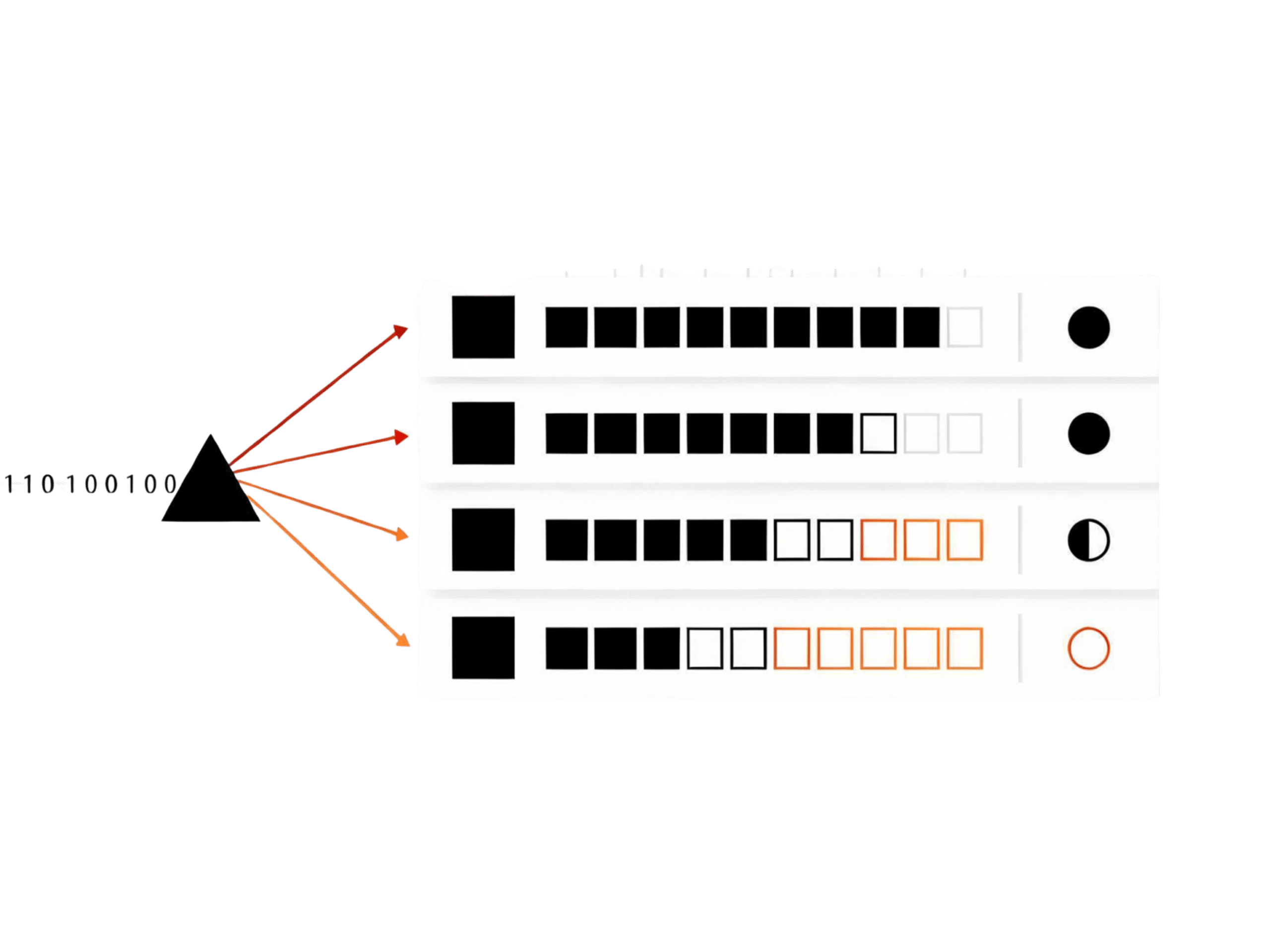
PRISM is McFadyen's product data intelligence layer for large B2B catalogs. It reads product master data from your ERP, PIM, and supplier feeds, infers what is missing against your own schema with a confidence score on every proposed value, routes low-confidence values to a human specialist for verification, and returns the result in a file your systems import. Your PIM stays the system of record. PRISM fills the fields it was never designed to author.
Start with the Catalog Health Assessment: two to three weeks, up to 2,500 SKUs. You send one export. Read only, no connector, nothing written to your systems. You get your Catalog Intelligence Score, every SKU routed AI, hybrid, or manual, 20 SKUs fully enriched so you can check the work, and a priced remediation plan you own.
Your Systems Have the Data. Your Operations Don't Have the Answers.
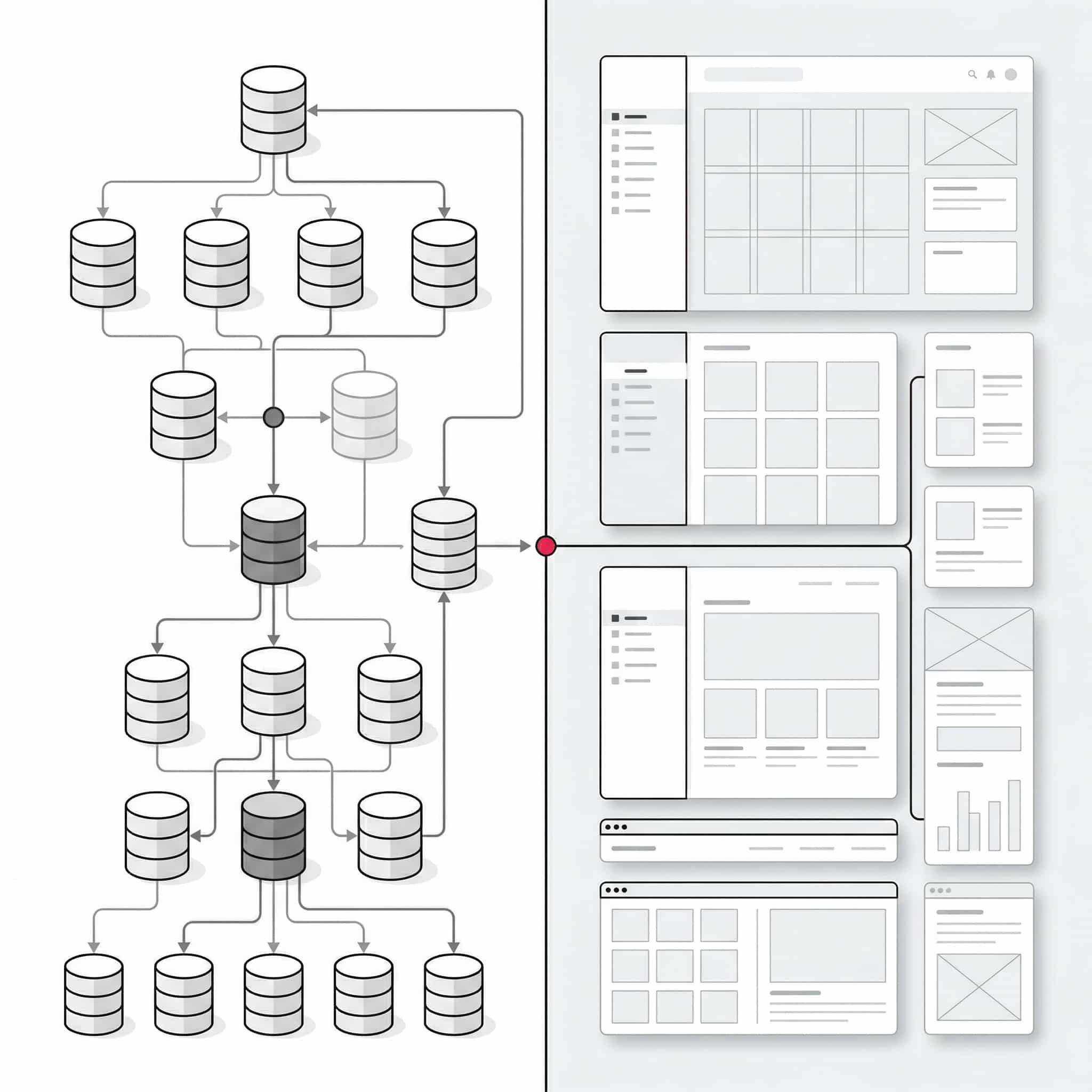
Distributors and manufacturers are sitting on more data than ever. Order history. Product attributes. Pricing rules. Customer behavior. All of it scattered across ERP systems, commerce platforms, PIMs, and spreadsheets that do not talk to each other.
The result is not a lack of insight. It is the wrong insight, at the wrong time, from the wrong source. Procurement decisions made on yesterday's inventory. Pricing exceptions handled manually. Merchandising driven by gut instead of behavior data.
AI does not fix this. It amplifies it. Clean data architecture fixes this.



Embedded Across the Commerce Lifecycle
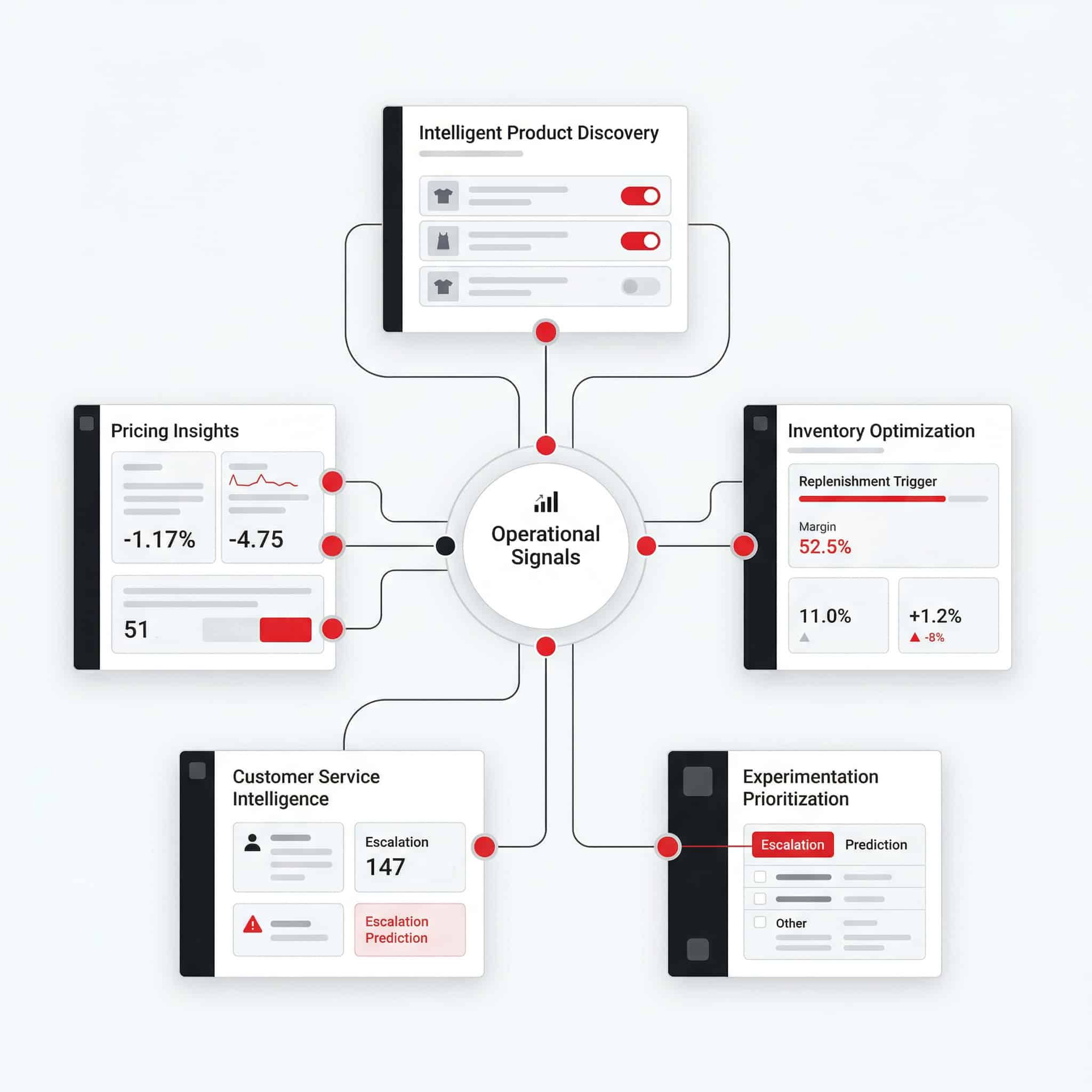
- Intelligent product discovery and personalization, including AI-powered search and recommendations calibrated to account, contract, and buying history
- Pricing, promotion, and demand insights, including margin optimization and competitive positioning signals
- Inventory and fulfillment optimization, including real-time stock risk, replenishment triggers, and multi-warehouse routing
- Customer service and support intelligence, including ticket deflection, exception routing, and escalation prediction
- Experimentation and optimization prioritization, enabling data-driven velocity on what to test next
The organizations that win are not the ones running more AI experiments. They are the ones whose entire operation runs on better signals. That is what this solution builds.
For marketplace operators, the MPM dashboard provides seller performance scoring, assortment gap analysis, and pricing intelligence across the full seller network, turning marketplace data into operational decisions. Contact us about MPM dashboards built on real client implementations.
Behavioral cohort analysis, funnel diagnostics, and session-level commerce analytics, turning buyer behavior data into actionable merchandising and experience decisions. Know which paths convert, which segments churn, and where friction is costing you revenue.

Most Data Is Partially AI-Ready. The Gap Is What Costs You.
Client Success
Data Intelligence in Practice

Bay Supply
Bay Supply needed visibility into commerce performance data to make faster, more confident merchandising and operations decisions. McFadyen built analytics dashboards that surfaced actionable signals from their commerce and order data.
- Commerce performance dashboards connecting order, catalog, and customer data
- Data quality baseline established as foundation for AI-readiness
- Merchandising insights surfaced from behavioral and transaction data

Online Chemicals Marketplace
The leading chemical company marketplace required data infrastructure and performance dashboards to manage seller performance, assortment gaps, and pricing intelligence across a complex multi-seller environment.
- Marketplace performance management dashboard implementation
- Seller performance scoring and assortment analytics
- Pricing intelligence across multi-seller catalog
Built for the B2B Organizations Where Data Silos Are Costing Revenue
IT & Data Engineering Leaders
Commerce & Digital Leaders
Operations & Analytics Leaders